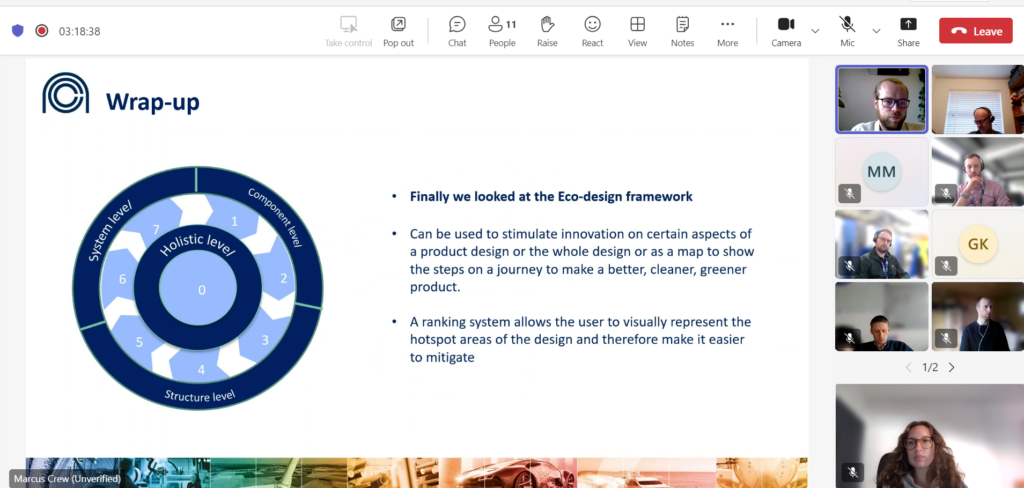
On December 3rd and 4th, 2024, the 2nd Internal Workshop on “Introduction to Sustainable Materials in Product Design” took place virtually, hosted by Marcus Crew from the National Composites Centre, in Bristol (UK).
Over the course of two mornings, participants explored the importance of sustainability in product design and examined strategies for integrating sustainable practices into their everyday processes.
The workshop highlighted key sustainable design principles, emphasiszing the increasing need for environmentally responsible choices. The sessions were designed to enhance knowledge, develop practical skills, and cultivate the right attitudes necessary to drive meaningful change in product development.
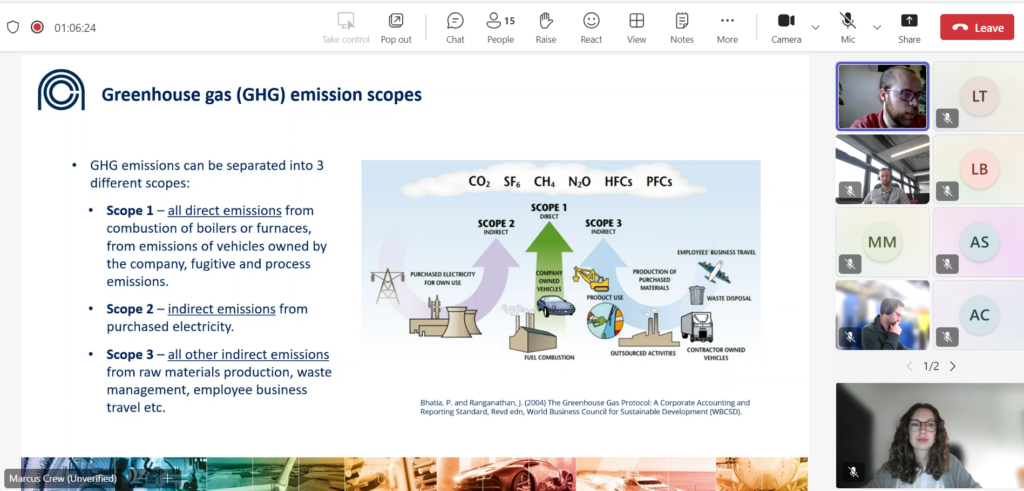
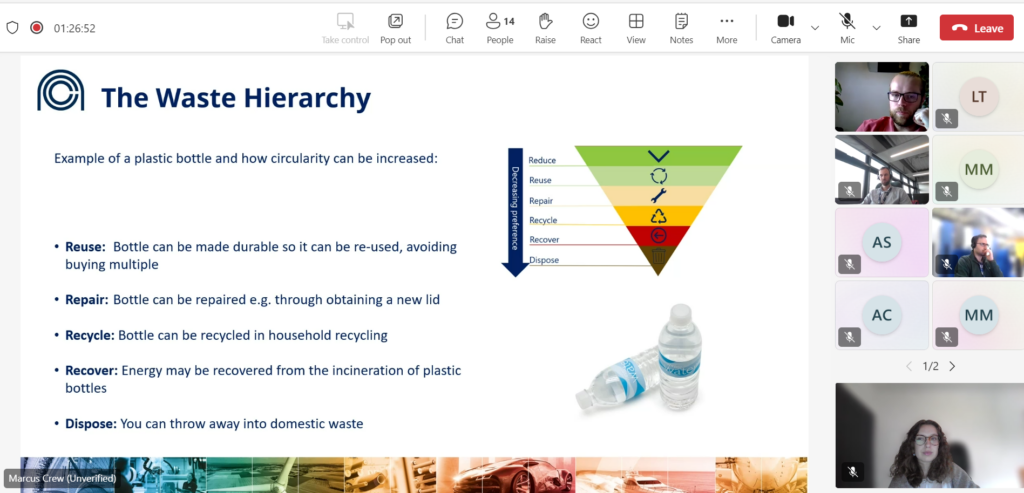
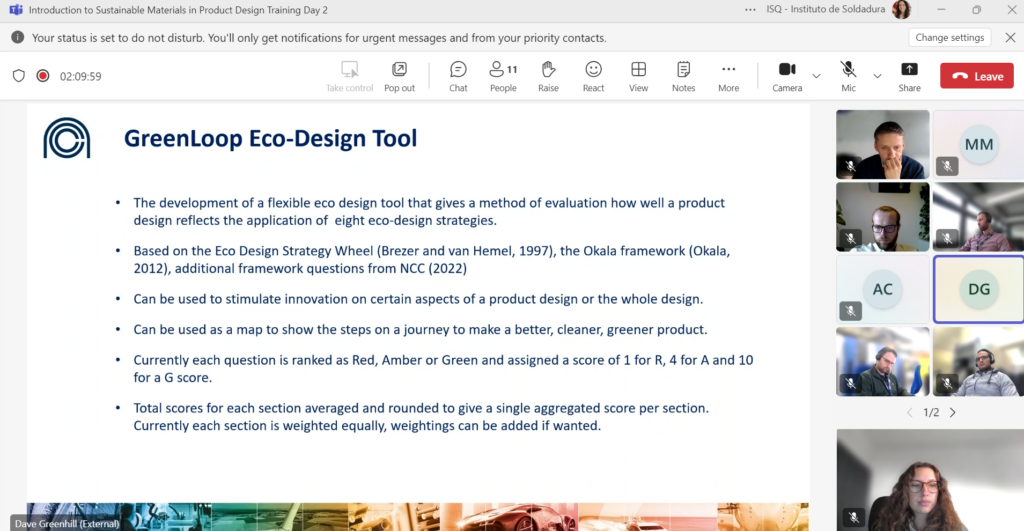
Key topics covered included the fundamentals of sustainability, focusing on the three pillars of sustainability and their application in design. Participants also assessed the impact of global warming and greenhouse gases on the environment, learning methods to mitigate these effects. Additionally, they explored tools to measure and implement circular design practices, as well as practical approaches to embedding sustainability throughout the product lifecycle via Design for Sustainability (DfS). Demonstrations of eco-design tools and software provided hands-on experience to support sustainable design efforts.
Throughout the workshop, attendees engaged in discussions, Q&A sessions, and practical activities, including exploring concepts like Sustainable Development Goals (SDGs), Planetary Boundaries (PBs), and Doughnut Economics, to frame sustainability within a global context. Hands-on tasks allowed participants to apply circularity principles and evaluate real-world sustainability applications in design.
By the end of the workshop, participants had gained a deeper understanding of sustainability’s role in product design and its environmental impact. They were equipped with practical tools and techniques, such as DfS and eco-design strategies, to implement sustainable practices in their own work. The workshop also provided valuable insights into current and future policies influencing sustainable product design.
Participants left the event inspired and ready to influence peers and organiszations, championing sustainable design tools and methodologies to amplify the initiative’s impact.
The success of the workshop highlights the importance of continuous learning and collaboration in addressing global challenges like climate change. It has laid a strong foundation for future exploration of sustainable practices, empowering participants to lead the transformation of product design into a force for environmental goods.
Stay tuned for more workshops and initiatives aimed at fostering sustainability in design and innovation!